Cognitive Neuroscience (M.Sc.)
Faculty of Natural Sciences
What is cognitive neuroscience?
Where psychology, the brain, and technology converge
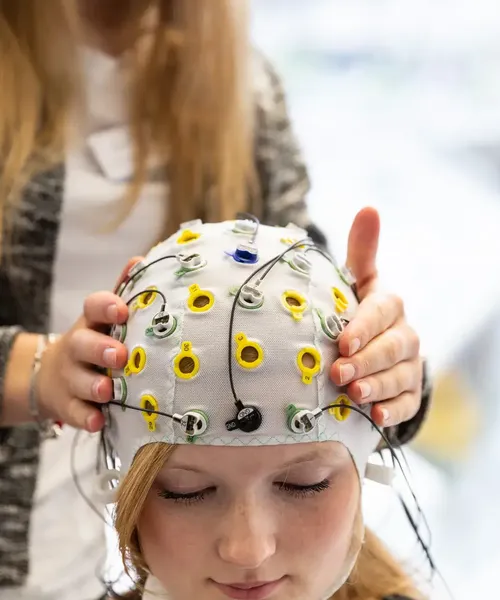
Cognitive neuroscience investigates how perception, thoughts, emotions, and consciousness emerge in the human brain. Using experimental methods and modern technologies, the field explores the neural basis of human experience and translates scientific findings into evidence-based medical applications and technological innovations – from artificial intelligence and precision medicine to novel wellbeing products.
Why study cognitive neuroscience?
A future-oriented discipline with social relevance
The English-language master's program in cognitive neuroscience combines psychology, neuroscience, and data-driven technologies. Students learn to conduct research independently and responsibly and develop a deep understanding of the interface between human consciousness and technical applications. The master's program is aimed at anyone who combines scientific curiosity with methodological precision and wants to actively contribute to innovations in medicine, technology, and research.
The Master's program in Cognitive Neuroscience (M.Sc.) is currently undergoing the process of state recognition and professional accreditation.
Quick overview
Start of program
October 1 (winter semester)
Type/duration of program
Full-time/4 semesters
Tuition fees
795 euros/month
Enrollment fee
One-time fee of 100 euros
Degree
Master of Science
Practical experience
Research internship
Language of instruction
English
Areas of employment
» Universities and non-university institutions of medical research
» Medical technology and the future-oriented e-health sector
» Data management, data analysis, and data science
» Medical and quality management
» Start-ups, especially in the field of technical wellbeing products
» Innovation fields such as neuromarketing or brain-computer interfaces
Studies
A systematic approach to success
A structured, practical, and individually supervised course of study for anyone who wants to conduct their own research, take on responsibility, and shape innovation.
The program offers:
- Admission without a grade-based cutoff, selection via interview
- Clear study structure and individual support
- Targeted exam preparation
- Preparation for doctoral studies as well as demanding professional fields
Study content
How is cognitive neuroscience studied at MSB?
Research-oriented, data-based, practical
The master's program focuses on experimental work and the analysis of complex data. Students learn to measure and evaluate neural and physical processes and interpret them in a scientific context.
The course content includes
- Experimentation and data analysis
- Anatomy, physiology, and biochemistry of the central nervous system
- Neurocognitive methods such as EEG, eye tracking, TMS, and (f)MRI Programming, data analysis, and visualization
- Functions of human consciousness
- Neurostimulation for medical applications
- Good scientific practice in empirical work
Our focus: Methods, data, consciousness, and neurostimulation
- Planning and conducting experiments according to the highest research and ethical standards
- Practical application of neurocognitive measurement methods and data-based analysis
- Development of a scientific research personality
- Precision medicine: Use of individual differences to optimize treatments
- Empirical consciousness research and targeted neurostimulation
Clearly structured: Focused on research and development
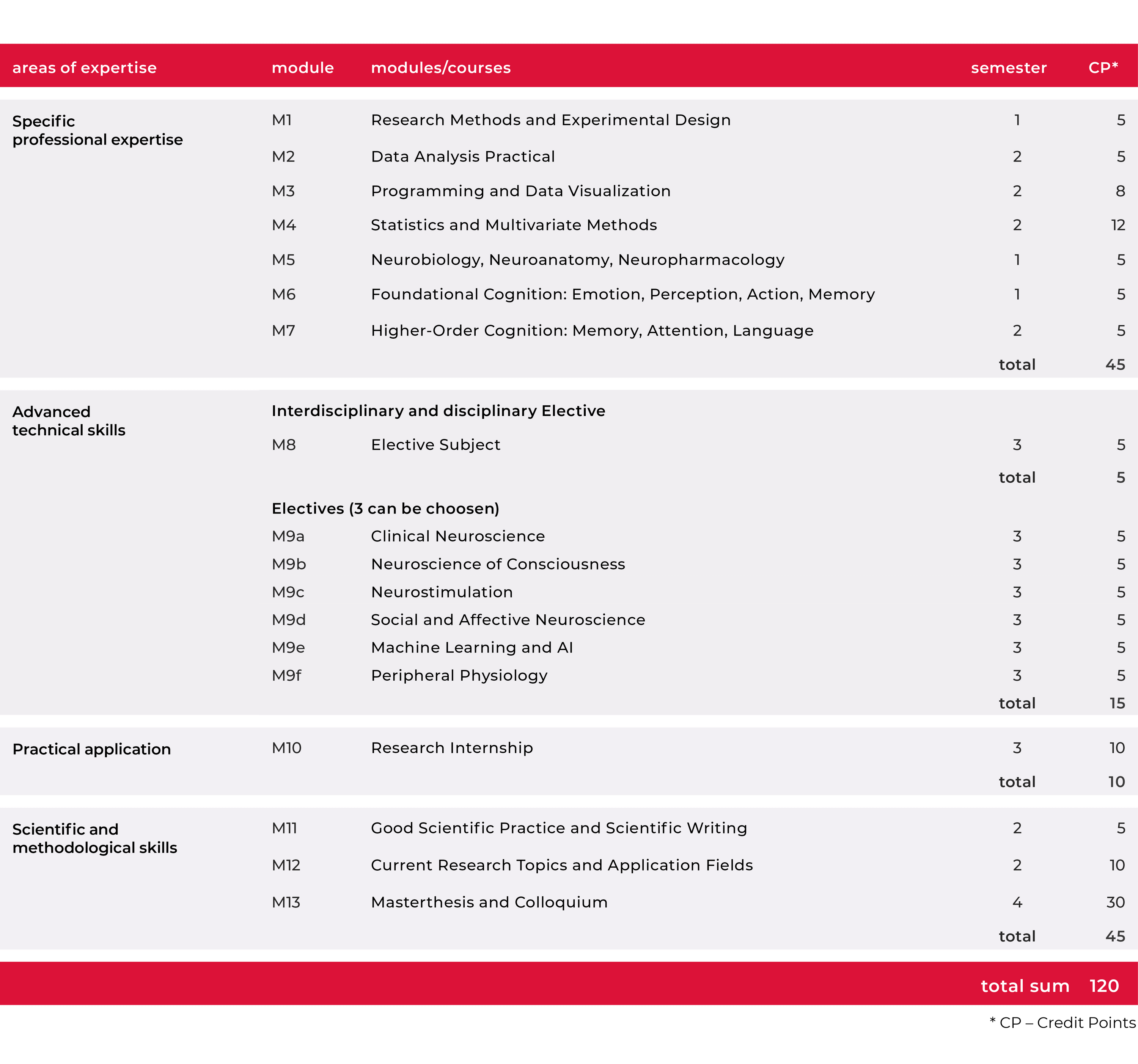
The course is clearly structured and consistently focused on research and development: In the first year, students explore key topics in cognitive psychology in depth and develop data analysis skills. In the second year, students develop individual areas of specialization, train practical laboratory skills, and apply these in their master's thesis.
Team-based learning: Interdisciplinary university concept at MSB
Modern neuro and data labs, involvement in current research projects, and close, personal support facilitate the learning process. Cognitive neuroscience is taught at MSB in an interdisciplinary style – in close collaboration with psychology and human medicine.
Moduls
Admission
Admission requirements at a glance:
- Eligibility to study in master's programs in accordance with § 10 BerlHG.
- A successfully completed bachelor's degree in psychology, psychotherapy, neuroscience, or in the fields of psychological and cognitive science, biomedical science, mathematics and natural sciences, computer science and data-oriented subjects, or a related field with at least 180 credit points.
- English language skills at level B2 according to the Common European Framework of Reference for Languages (CEFR) are required.
There is no minimum grade requirement for studying at MSB. Following your application, we will assess your personal motivation in an individual admission interview.
Career
Where are my skills needed?
Research, data science, and innovation
The master's degree qualifies graduates for a wide range of jobs in research, development, and data-driven professions. Graduates work in areas such as:
- Universities and non-university institutions of medical research
- Medical technology and the future-oriented e-health sector
- Data management, data analysis, and data science
- Medical and quality management
- Start-ups, especially in the field of technical wellbeing products
- Innovation fields such as neuromarketing or brain-computer interfaces
Research as a career path: Doctorate in Cognitive Neuroscience
For graduates with academic ambitions, the Master's program in Cognitive Neuroscience also opens up direct access to a doctorate. The methodological and technical skills acquired enable research projects not only in basic neuroscience research, but also in clinical, medical, psychotherapeutic, and technology-oriented disciplines.
Request more Information
* Mandatory Field
¹ You have the right to withdraw your consent at any time. Withdrawing your consent does not affect the lawfulness of processing based on consent before its withdrawal.